AI Photography Explained: How Artificial Intelligence is Enhancing Digital Cameras
Discover how AI photography is transforming digital cameras in 2026 — from scene recognition to real-time noise reduction, enhancing every shot you take.
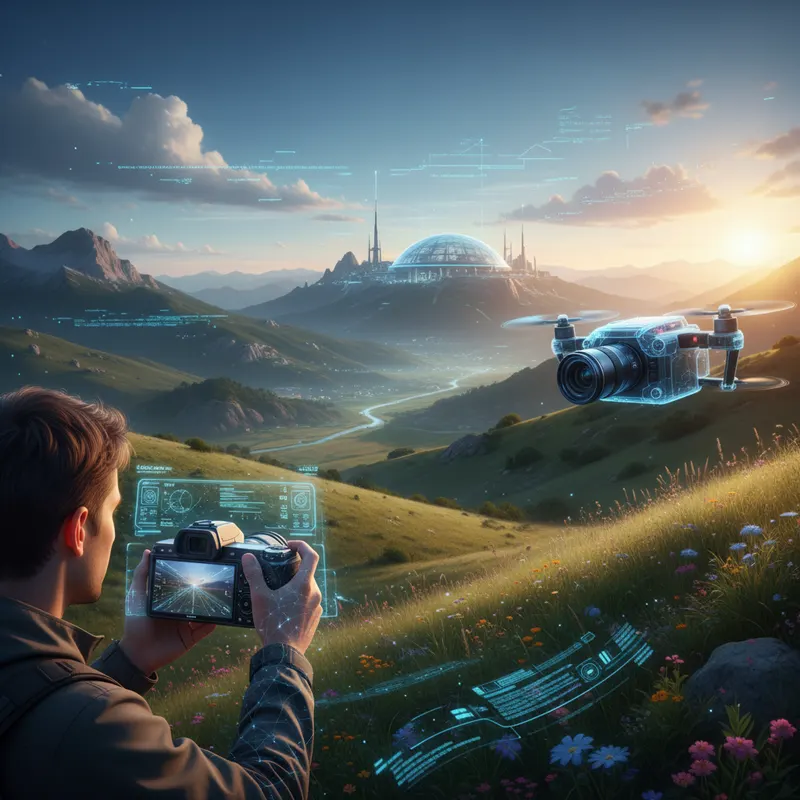
AI Photography Explained: How Artificial Intelligence is Enhancing Digital Cameras and Your Shots
If you’d told a photographer in 2018 that artificial intelligence would soon be quietly running inside their camera — analyzing scenes, tracking subjects, and cleaning up noise in real time — they probably would have laughed. Well, nobody’s laughing now. AI has become the most capable silent partner in modern photography, doing invisible heavy lifting inside every flagship smartphone and mirrorless body you can buy today. It analyzes your scene before you press the shutter, fixes technical problems you didn’t even notice, and sometimes anticipates the moment before you do. Whether you’re a weekend hobbyist shooting on your phone or a working professional with a full mirrorless kit, AI is already shaping your images — often in ways that simply weren’t possible half a decade ago.
So What Exactly Is AI Photography — and How Does It Work Under the Hood?
At its core, AI photography means using machine learning models — specifically convolutional neural networks, or CNNs — to process and improve images either at the moment of capture or afterward in editing software. These models are trained on hundreds of millions of labeled photographs, which teaches them to recognize patterns: the texture of a clear sky, the geometry of a human face, the erratic motion of a bird in flight, the grain signature of a high-ISO night shot. Once a pattern is identified, the AI applies targeted corrections or enhancements — all within milliseconds.
What’s interesting is that modern cameras don’t apply AI just once. There are actually three separate stages where it shows up:
- Pre-capture: Scene classification, subject tracking, exposure metering
- At-capture: Real-time noise reduction, HDR frame merging, computational depth-of-field simulation
- Post-capture: AI upscaling, intelligent sharpening, automated color grading, object removal
That layered pipeline means even a technically rough shot — a touch underexposed, slightly soft on the edges — can come out of the camera looking genuinely polished. According to MIT Technology Review’s 2024 computational photography report, AI-assisted processing now accounts for more than 80% of the image quality gains seen in flagship smartphones released between 2022 and 2025. That’s not a small number.
AI Autofocus: The Feature That Genuinely Changed the Game
Ask almost any working photographer which AI feature has had the biggest real-world impact, and the answer is usually autofocus. AI-driven subject detection and tracking AF didn’t just improve an existing system — it fundamentally changed what’s possible. Instead of relying solely on contrast or phase detection points, these systems actually identify what they’re looking at: a person, a dog, a race car, a bird of prey. Then they lock focus on the most meaningful point — an eye, a face, the cockpit of a jet — and hold it even as the subject tears across the frame unpredictably.
Breaking Down How Subject Detection AF Actually Works
Each frame coming off the sensor gets processed by the camera’s NPU before it’s recorded. A compact CNN runs object detection on that frame, draws a bounding box around whatever it identifies as the primary subject, and feeds those coordinates back to the autofocus motor. This entire loop runs at 120 frames per second or faster on current top-tier cameras. It’s genuinely remarkable when you think about it.
Here’s how subject detection capabilities have evolved across major releases:
| Camera | Released | AI AF Subjects Supported | Tracking Frame Rate |
|---|---|---|---|
| Sony A9 II | 2019 | Human (eye, face, body) | 20 fps |
| Canon EOS R5 | 2020 | Human, animal (eye) | 20 fps |
| Sony A9 III | 2023 | Human, animal, vehicle, aircraft | 120 fps (global shutter) |
| Nikon Z9 | 2021 | Human, animal, vehicle, aircraft | 20 fps |
| Canon EOS R1 | 2024 | Human, animal, vehicle, aircraft, motorsport | 40 fps |
| Sony A1 II | 2025 | All above + insect | 30 fps |
The Canon EOS R1 — which launched in 2024 at around $6,299 — introduced dedicated motorsport tracking capable of following a Formula 1 car even when it’s partially hidden behind barriers. No autofocus system before it could do that reliably. That’s not marketing language; that’s a genuine technical leap.
What This Means for Photographers Day-to-Day
- Wildlife shooters are now hitting sharp eye-level focus on birds in flight at keeper rates of 70–90%, compared to roughly 30–40% with pre-AI systems. That difference is enormous in practice.
- Sports photographers can redirect mental energy toward composition, framing, and timing — trusting the AI to handle focus tracking that used to demand constant manual attention.
- Portrait photographers get consistent eye-detection AF even when subjects turn their heads quickly or move toward and away from the camera.
AI Noise Reduction: Actually Shooting at ISO 12800 Without Regret
High ISO performance is probably the most measurable benefit AI has delivered to everyday photographers. The old approach — luminance smoothing, chroma noise filtering — always involved a trade-off: clean up the noise, lose the detail. Fabric weave went soft. Skin pores disappeared. Feather texture turned to mush. AI noise reduction changes the equation because it’s been trained to tell the difference between genuine fine detail and random sensor noise. It keeps one and removes the other.
Traditional Noise Reduction vs. AI — a Practical Comparison
| Method | ISO 12800 Detail Retention | Processing Speed | Edge Artifacts |
|---|---|---|---|
| Luminance Smoothing (classic) | Low — textures blurred | Instant (in-camera) | Moderate |
| Wavelet NR (Lightroom legacy) | Moderate | 2–5 seconds | Low |
| AI NR — in-camera (Sony, 2024) | High — textures preserved | 8–30 seconds per image | Very Low |
| AI NR — software (DxO DeepPRIME XD2) | Very High | 10–60 seconds per image | Near Zero |
DxO Labs, whose DeepPRIME XD2 technology is widely considered the industry gold standard, trained their 2024 neural network model on over 400 million image patches. The results at ISO 25600 are — honestly — something you have to see to believe. Competitors using traditional methods can’t get close.
Sony brought in-camera AI noise reduction to the A7 IV via a 2023 firmware update, which was a bigger deal than it sounds. Suddenly, photographers could apply deep-learning NR directly to RAW files inside the camera — no laptop required. Processing takes roughly 8–30 seconds per image depending on file complexity, which is a perfectly reasonable wait given that you’d previously have needed a desktop and a coffee break to get the same result.
Computational Photography: HDR, Simulated Bokeh, and the Multi-Frame Revolution
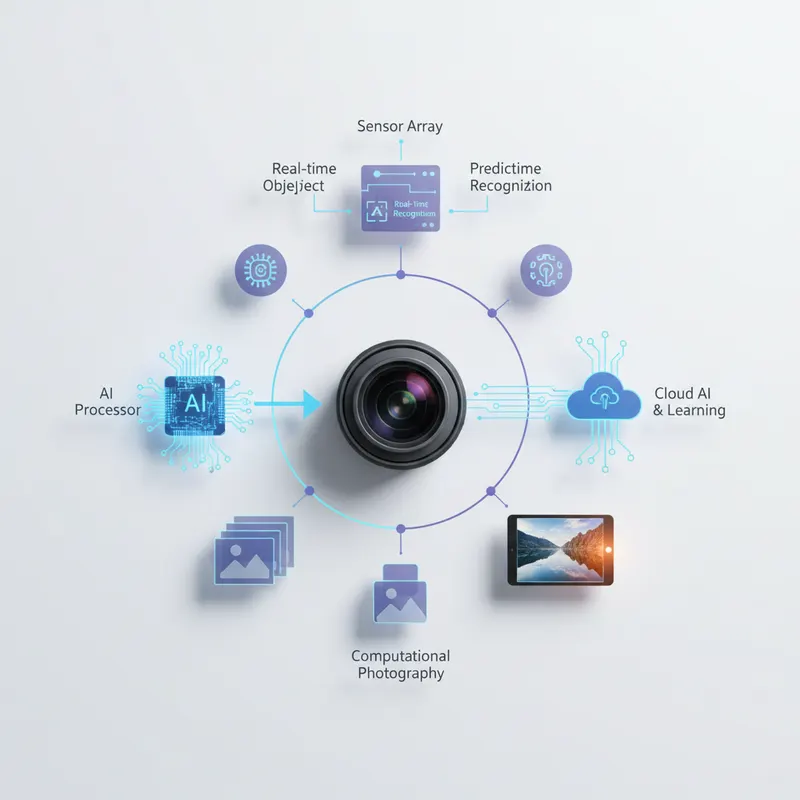
Computational photography is where AI gets genuinely creative — combining data from multiple frames or sensors into a single image that no individual exposure could have produced. This is the main arena where smartphone cameras have narrowed the gap with dedicated hardware, and it’s also where dedicated cameras are now pushing back hard.
Multi-Frame HDR Processing
Apple’s A18 Pro chip (iPhone 16 Pro) and Google’s Tensor G4 (Pixel 9 Pro) both capture sequences of three to nine frames at different exposure values simultaneously, then stitch them together using neural networks specifically trained on highlight and shadow recovery. The final image can show a dynamic range exceeding 14 stops — genuinely competitive with dedicated full-frame sensors under the right conditions.
Apple’s 2024 iPhone 16 Pro product documentation states that the A18 Pro’s 16-core Neural Engine handles 35 trillion operations per second, completing Photonic Engine HDR merging in under half a second. You never notice it happening. That’s kind of the point.
AI Bokeh and Depth Mapping — Still Impressive, Still Imperfect
Portrait Mode, found on smartphones and increasingly on mirrorless cameras, uses AI depth mapping to simulate the shallow focus look of a fast prime lens. To pull it off convincingly, the system needs to:
- Identify the main subject — almost always a person
- Build a depth map of the entire frame using stereo cameras, LiDAR sensors, or monocular depth estimation algorithms
- Apply a blur gradient that respects subject edges — including the notoriously difficult areas around hair strands and glasses frames
When it goes wrong — and it still does sometimes — the artifacts are immediately obvious: halos around subjects, hair that looks like it’s been pasted onto a blurred background. That said, Apple, Google, and Samsung have invested heavily in solving these edge cases, and the 2024–2026 updates have largely fixed the hair and glasses failures that made earlier Portrait Mode results look awkward. It’s not perfect optical bokeh, but for most people, most of the time, it’s close enough.
Scene Recognition: Smarter Automatic Modes
Panasonic, Sony, Nikon, and Canon all offer scene recognition systems that can classify your subject into 30 or more categories — food, landscape, nighttime cityscape, portrait, sport, close-up macro — and automatically tune:
- White balance
- Sharpening and clarity levels
- Contrast and tone curve
- Noise reduction intensity
- Focus mode and subject tracking priority
For beginners, this is enormously helpful. But even experienced photographers can benefit when shooting in rapidly changing conditions where manually adjusting every parameter just isn’t practical.
AI in Post-Processing: The Software Side of the Revolution
The AI photography story doesn’t end when you put the camera down. Editing software has undergone its own dramatic transformation, with tools that used to require hours of skilled manual work now running in seconds — sometimes with a single click.
Here’s a look at the leading AI post-processing tools available in 2026 and where each one excels:
| Software | Key AI Feature | Best For | Price (2025) |
|---|---|---|---|
| Adobe Lightroom | AI Denoise, AI Masking, Generative Remove | General photography | $9.99/month |
| DxO PhotoLab 8 | DeepPRIME XD2 noise reduction | High-ISO RAW processing | $229 one-time |
| Topaz Photo AI | Sharpen AI, Upscale AI, Denoise AI | Recovery of difficult images | $199 one-time |
| Luminar Neo | Relight AI, Sky AI, Portrait AI | Creative editing | $99/year |
| Skylum Aurora HDR | AI HDR merging | Landscape and architectural | $99 one-time |
AI Upscaling: Breathing New Life Into Old Files
AI upscaling — often called Super Resolution — uses neural networks trained on matched pairs of low- and high-resolution images to add pixel detail intelligently, rather than just stretching existing pixels until they blur. Adobe’s Super Resolution feature (originally 2021, significantly updated in 2024) can quadruple an image’s pixel count while keeping edge detail crisp. Topaz Gigapixel AI 7, released in 2025, pushes that to 6× enlargement — a claim backed by independent testing from imaging analysis site Imaging Resource.
The practical value here is real. A 12-megapixel file from a 2010 DSLR can be upscaled to something that credibly resembles a 48-megapixel file — usable for large-format printing, billboard work, or simply future-proofing an older archive. That’s not nothing.
The Privacy and Ethics Side of AI Photography — Worth Taking Seriously
It would be dishonest to talk about AI photography without acknowledging the harder questions it raises. Facial recognition embedded in cameras and cloud-based photo services can identify individuals without their knowledge or consent. In the European Union, the AI Act — enacted in August 2024 — specifically classifies real-time biometric identification in public spaces as a high-risk application, subject to strict legal limitations.
There’s also the question of image authenticity. AI editing tools can now replace backgrounds, remove people from a scene, alter facial expressions, or generate entirely new visual content. In most creative contexts, that’s exciting. In journalism, it’s a serious problem. The World Press Photo Foundation banned AI-generated content from competition in 2023 and updated its guidelines in 2024 to require disclosure of any AI-assisted edits beyond basic tonal adjustments. That’s the right call — and it reflects a broader industry reckoning that’s still playing out.
If you’re a professional photographer, understanding where these lines are isn’t optional. The technology is powerful; using it responsibly requires knowing its limits and the rules that govern it.
Final Thoughts: AI Is Raising the Floor for Everyone
Here’s the honest takeaway: AI isn’t replacing photographers, and it isn’t making photography trivially easy. What it’s doing — and doing remarkably well — is removing the technical ceiling on what’s achievable. Missed focus, crushed shadows, unusable high-ISO grain — these used to be hard limits. Now they’re solvable problems, often automatically. From the Sony A1 II tracking an insect in flight to DxO DeepPRIME XD2 recovering detail at ISO 25600 to Adobe Lightroom selecting a complex subject edge in under a second, AI has permanently raised the baseline quality that any photographer can expect from their gear.
The smart approach is straightforward: understand which AI features actually matter for the way you shoot, invest in the hardware or software that delivers those features most reliably, and keep learning as the technology continues to evolve at a pace that shows no signs of slowing through 2025 and 2026.
Ready to find the right AI-powered camera or editing software for your work? Browse our expert camera reviews and buying guides to find the best setup for your needs and budget.
You might also like

Best Cameras for Real Estate Photography in 2026
Find the best cameras for real estate photography in 2026. Compare full-frame picks for wide-angle interiors, HDR bracketing and dynamic range.

Best Budget Lenses for Sony A7 Cameras in 2026
Discover the best budget lenses for Sony A7 cameras in 2026, from affordable Sony FE primes to third-party Tamron, Sigma and Samyang E-mount glass.
How TikTok and Instagram Reels Are Reshaping Camera and Lens Choices
Discover how TikTok and Instagram Reels are reshaping camera and lens choices for content creators in 2026, with gear recommendations and expert insights.