Smartphone vs. Dedicated Camera: Is a Mirrorless or DSLR Still Worth It in 2026?
Smartphone vs. Dedicated Camera in 2026: discover whether a mirrorless or DSLR still delivers enough value over the latest camera phones to justify the investment.
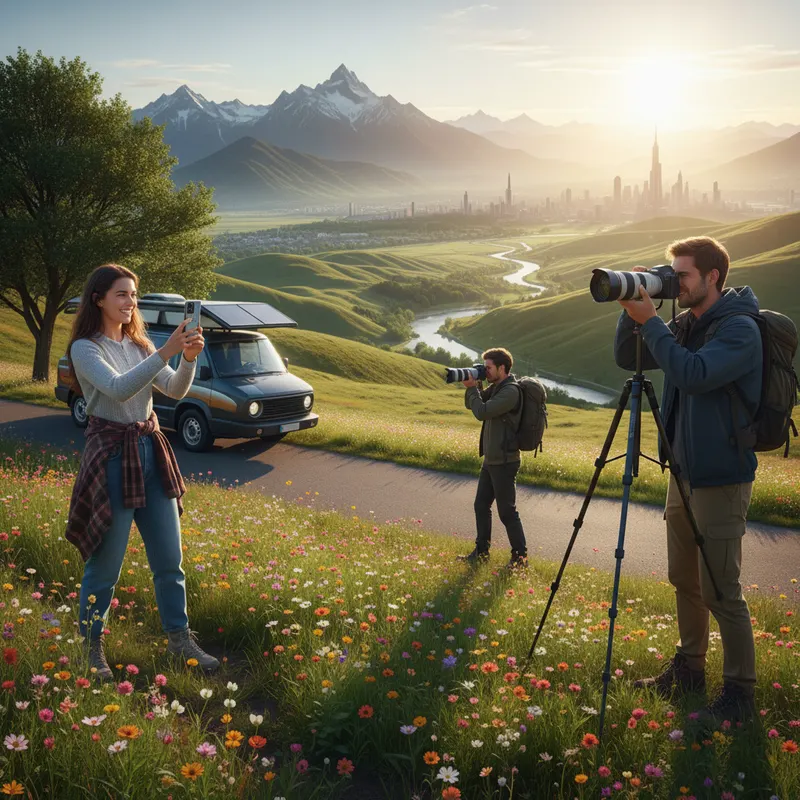
Few photography arguments have burned as long — or as loud — as the one pitting smartphones against dedicated cameras in 2026. Today’s flagship phones arrive with 1-inch sensors, 200 MP multi-camera arrays, and computational photography engines that would’ve seemed absurd half a decade ago. And yet mirrorless systems keep outselling DSLRs while pushing image quality into realms a phone simply cannot reach. So what actually belongs in your bag this year — or just your pocket?
1. Sensor Size: The Physics Wall That Software Can’t Fully Climb
Sensor dimensions remain the most fundamental dividing line between phones and dedicated cameras. Even the most capable camera phone today — the Apple iPhone 16 Pro Max uses a 1/1.28-inch primary sensor — can’t come close to a full-frame mirrorless body whose sensor is roughly 13 times larger in surface area. Bigger sensors pull in more light per pixel, create shallower, more natural depth of field, and handle high-ISO noise far more gracefully.
| Device Category | Typical Sensor Size | Approx. Light-Gathering Area |
|---|---|---|
| Entry smartphone | 1/2.55 inch | 1× (baseline) |
| Flagship smartphone (2026) | 1/1.28 – 1 inch | 2–4× |
| Micro Four Thirds mirrorless | 17.3 × 13 mm | 9× |
| APS-C mirrorless / DSLR | 23.5 × 15.6 mm | 14× |
| Full-frame mirrorless | 36 × 24 mm | 30× |
| Medium format mirrorless | 43.8 × 32.9 mm | 56× |
According to DxOMark’s 2025 sensor rankings, the top-scoring camera phone landed at 164 points, while the Sony α1 II reached 200 — and that gap isn’t shrinking. Physics sets the ceiling here, and no amount of clever software fully erases that reality.
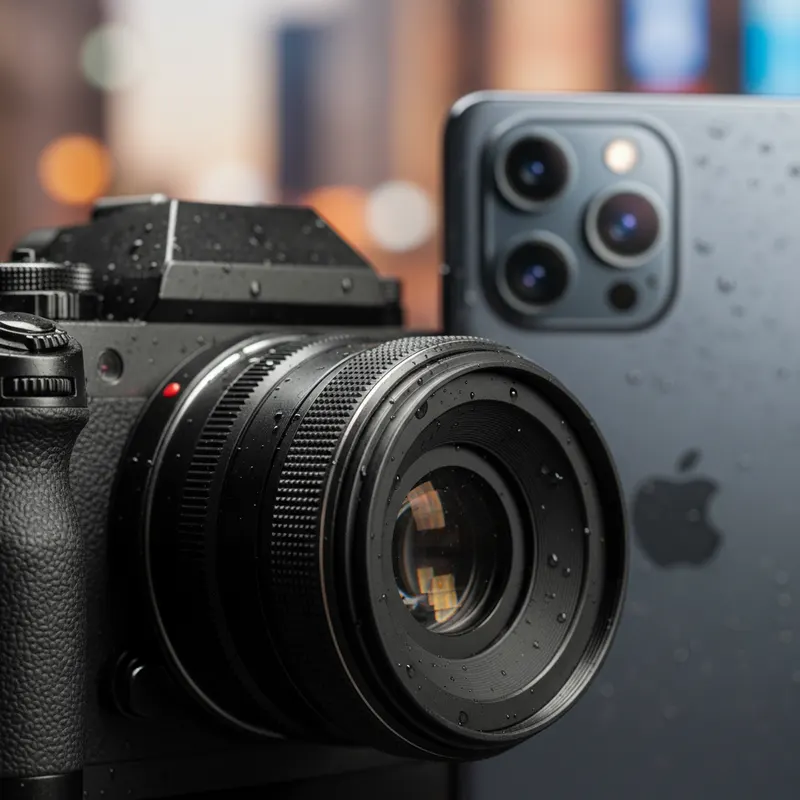
2. Lens Ecosystems: Optical Depth vs. Fixed-Camera Convenience
The ability to swap lenses is arguably the single biggest advantage a dedicated camera holds. The Sony E-mount alone supports over 300 compatible options — from Sony’s own G Master primes to third-party offerings from Sigma and Tamron. You can spend a morning with a 600 mm telephoto tracking birds, then click on a 14 mm f/1.8 ultra-wide for architectural work that afternoon. On the same body.
What Phones Actually Bring to the Table in 2026
The Samsung Galaxy S26 Ultra ships with four fixed cameras: a 200 MP main (23 mm equiv.), a 50 MP ultra-wide (13 mm), a 10 MP 3× telephoto (70 mm), and a 50 MP 10× periscope lens (230 mm). For everyday situations, that lineup handles an impressive range.
But there are real ceilings:
- Telephoto reach peaks around 230 mm equivalent before quality falls off noticeably.
- True macro isn’t available — what phones offer is software-assisted close focus, not genuine 1:1 optical magnification.
- Telephoto performance at night suffers badly because secondary phone sensors are often tiny (1/3 inch or smaller).
- Lens character — the distinctive rendering, bokeh shape, and micro-contrast of premium glass — simply doesn’t exist in a fixed-lens phone system.
Where DSLRs Fit in 2026
Canon officially stepped back from new DSLR development back in 2022, and Nikon followed suit by going all-in on the Z-series mirrorless platform. That doesn’t mean a Canon 5D Mark IV or Nikon D850 produces bad images — they absolutely don’t — but the ecosystem momentum is clearly gone. If you’re sitting on a collection of Canon EF or Nikon F glass, adapting it to a mirrorless body makes far more sense than clinging to an aging DSLR.
3. Autofocus, Burst Speed, and Video Capability
Today’s mirrorless cameras have achieved autofocus precision that would’ve seemed impossible ten years ago. The Sony α9 III fires at 120 fps via a global shutter with zero rolling shutter warping — a spec no phone can touch. Subject-tracking systems in 2026 mirrorless bodies recognize eyes, faces, animals, vehicles, and even insects on the fly, with keeper rates above 95% under professional shooting conditions.
Video: Where Phones Have Genuinely Closed the Gap
There’s no denying that smartphones have made serious video progress:
- The Apple iPhone 16 Pro records Apple Log ProRes 4K internally at up to 120 fps.
- The Samsung Galaxy S26 Ultra can capture 8K footage at 30 fps.
- Both phones are capable of delivering broadcast-quality output for YouTube, social content, and even certain documentary projects.
That said, a Sony ZV-E1 full-frame cinema body records 4K at 120 fps with 14+ stops of dynamic range, S-Log3 profiles, and XLR audio inputs. When color grading precision or narrative production quality is the standard, there’s really no contest.
Speed Metrics Side by Side
| Metric | Top Flagship Phone (2026) | Top Mirrorless (2026) |
|---|---|---|
| Burst rate | 30 fps (JPEG) | 120 fps (RAW, Sony α9 III) |
| AF acquisition time | ~0.12 sec | ~0.02 sec |
| Rolling shutter | Moderate | None (global shutter models) |
| Max video resolution | 8K/30p | 8K/60p |
| Log video profile | Yes (ProRes Log) | Yes (S-Log3 / C-Log3) |
4. Portability, Pricing, and What Actually Works Day to Day
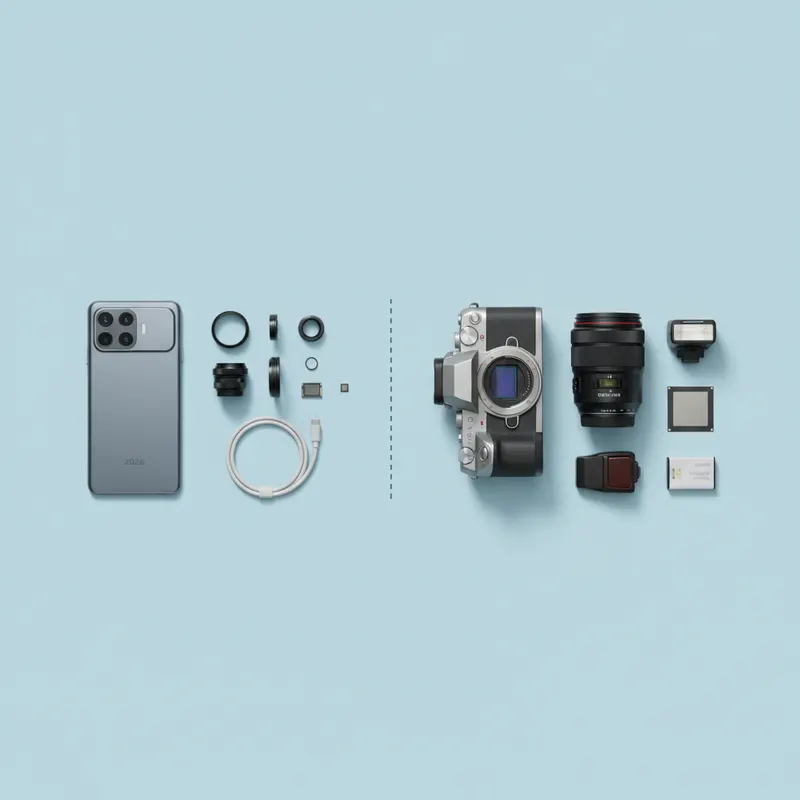
Breaking Down the Costs
Entry-level pricing has shifted in interesting ways by 2026:
| System | Entry-Level Price (Body Only) | Full Kit (Body + Lens) |
|---|---|---|
| Flagship smartphone | $1,099–$1,399 | Included |
| APS-C mirrorless kit | $699–$899 | $849–$1,099 |
| Full-frame mirrorless | $1,799–$2,499 | $2,300–$3,500 |
| Used DSLR (Canon/Nikon) | $300–$700 | $500–$1,100 |
Here’s something worth noting: a Samsung Galaxy S26 Ultra runs $1,299 — which is more than a Sony ZV-E10 II APS-C mirrorless kit. The narrative that phones are inherently cheaper than cameras doesn’t hold up anymore at the flagship level. For that same budget, you could put together a genuinely capable mirrorless system and get considerably stronger image quality in almost any controlled shooting environment.
5. AI and Computational Photography: The Great Equalizer — Sort Of
AI is reshaping both categories at the same time, and it’s worth thinking clearly about what that actually means. For a deeper look at how machine learning is changing the craft, check out our detailed guide on AI Photography Explained: How Artificial Intelligence is Enhancing Digital Cameras.
The neural engines inside phones — Apple’s A18 Pro, Qualcomm’s Snapdragon 8 Elite — are doing remarkable things:
- Real-time HDR merging across ten or more frames
- Pixel-level AI noise reduction
- Automatic sky replacement and object removal
- Scene-specific color science applied at the moment of capture
Mirrorless systems are catching up quickly. Sony’s dedicated AI Processing Unit in the α1 II performs scene-based subject detection at 60 fps directly on the viewfinder feed. Canon’s Dual Pixel Intelligent AF now tracks 17 distinct subject categories simultaneously. Nikon’s Z9 uses deep learning to lock bird-eye AF onto a sparrow at 100 meters. That’s not a gimmick — that’s genuinely useful.
A Word on Authenticity
When AI starts modifying images at the point of capture — sometimes without any conscious input from the photographer — the question of photographic truth becomes complicated. If authenticity matters to your work, read our guide on Deepfake Photography and Camera Authenticity: How to Spot Fakes. This is particularly relevant for photojournalists and documentary photographers operating under strict editorial standards.
6. A Clear Framework for Choosing in 2026
When it comes down to it, this choice is about your shooting habits, your ambitions, and how your workflow actually operates. Here’s how to think about it:
Go With a Flagship Smartphone If:
- You’re shooting primarily for social media, reels, or short-form video content.
- Portability comes first — travel, street work, events, spontaneous moments.
- You want one device that handles communication, editing, and shooting together.
- Your total budget is under $1,500 and you don’t want to invest in additional lenses.
- Instant sharing to clients or collaborators via cloud is part of how you work.
Go With a Mirrorless Camera If:
- You shoot portraits, weddings, sports, wildlife, or commercial jobs professionally.
- You need consistent, reliable results across a full day of shooting — eight hours or more.
- You want to build a lens collection that holds real value over a decade or longer.
- Dynamic range, color depth, and RAW editing flexibility are priorities.
- You’re producing video for broadcast, independent film, or high-end brand work.
Go With a Used DSLR If:
- You’re just starting out and your total budget is somewhere in the $400–$700 range.
- You already have Canon EF or Nikon F lenses sitting in a drawer.
- You genuinely prefer the optical viewfinder experience over electronic alternatives.
- 4K video and AI-assisted features aren’t things you need right now.

Final Verdict: Mirrorless and DSLRs Remain Genuinely Worthwhile in 2026
There is no single winner in the smartphone vs. dedicated camera conversation — and honestly, that’s a good thing. Phones have brought real photographic capability to an enormous number of people who never would have picked up a camera otherwise. That matters. But mirrorless systems — and well-maintained DSLRs — still offer advantages in sensor size, optical versatility, autofocus precision, and hands-on creative control that no phone maker has managed to fully replicate heading into 2026.
If photography is your profession, a serious passion, or you regularly need images destined for print, commercial use, or cinematic production, a mirrorless camera is absolutely worth the investment. The real question has never been whether dedicated cameras are becoming obsolete — they’re not — but whether what they uniquely offer lines up with what your work actually demands.
Want to figure out exactly which camera suits your 2026 workflow? Explore our in-depth reviews and carefully researched buying guides at Digital Cameras Info and find the gear that fits your vision.
You might also like
Mirrorless vs DSLR: Which Camera Should You Buy in 2026?
Mirrorless or DSLR? We compare size, autofocus, battery life, lens selection, and image quality to help you decide which type is right for you.
Nikon Z6 III vs Sony A7 IV: Full-Frame Showdown
Nikon Z6 III or Sony A7 IV? We compare autofocus, image quality, video features, and value to help you choose the right full-frame mirrorless camera.

Best Cameras for Real Estate Photography in 2026
Find the best cameras for real estate photography in 2026. Compare full-frame picks for wide-angle interiors, HDR bracketing and dynamic range.